
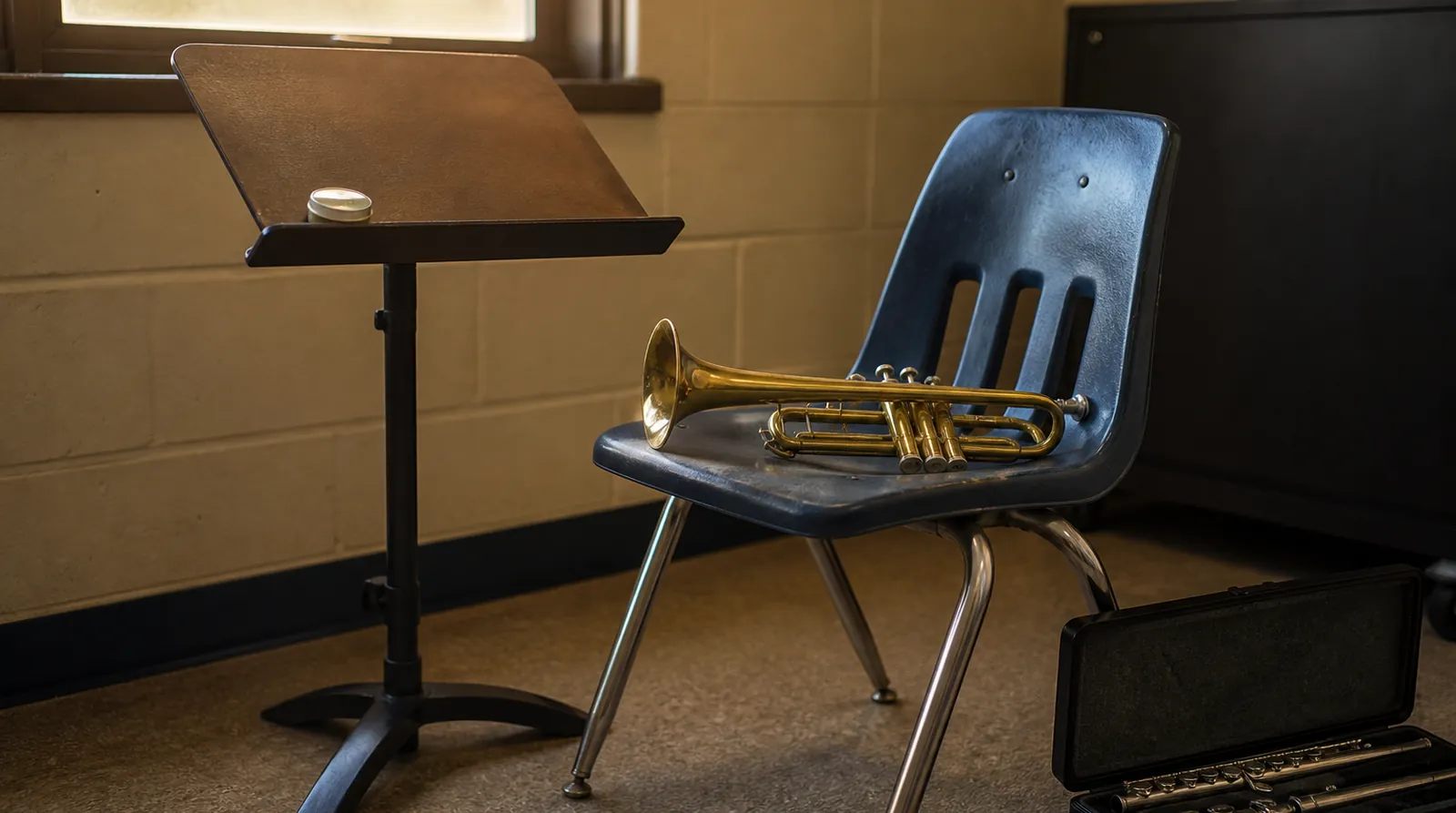

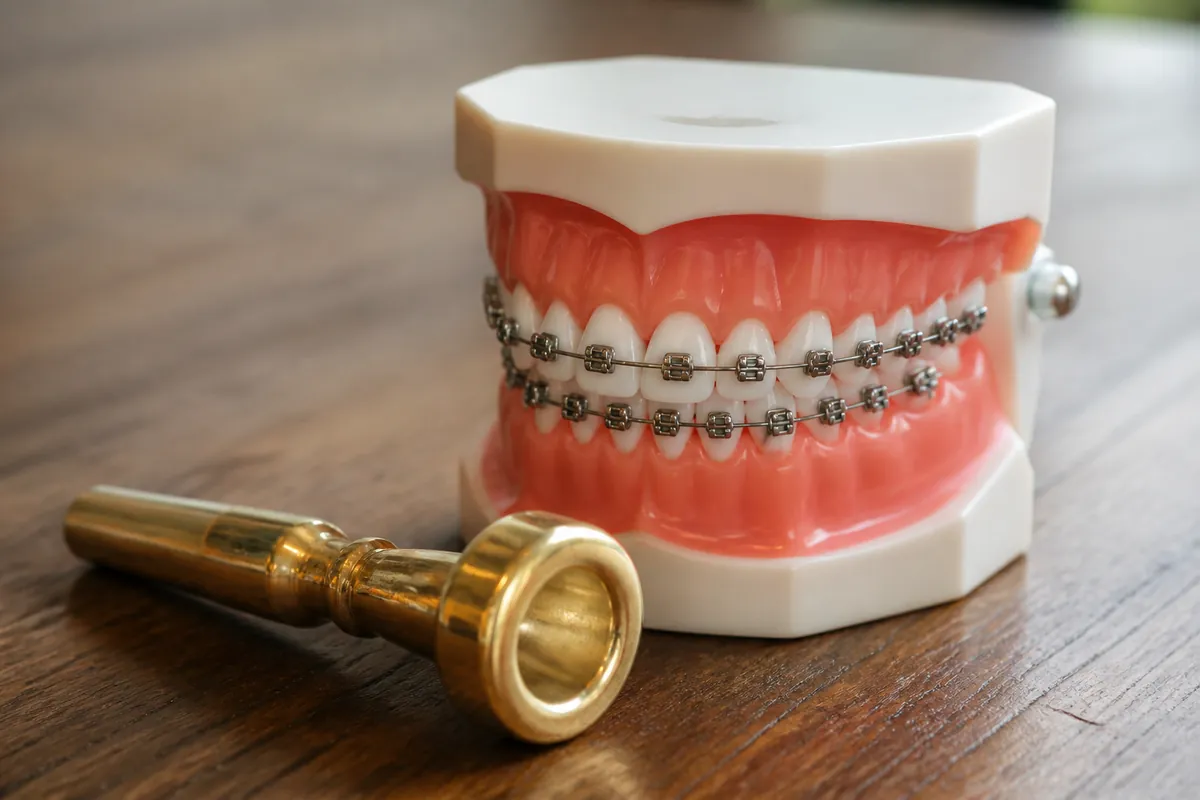
A Grade 7 trumpet player with new braces usually has the same complaint within a week: the mouthpiece feels like it is pressing the lips into the brackets. Most students adjust, and how long it takes depends on the instrument.
This article covers what band students have reported, what a 2018 review of the research found, and what helps in practice. The evidence is small and mostly old, and we will say where it runs out. Everything here applies to adults in community bands too.
What band students report
The most direct data we found is a small survey, adapted from the Texas Dental Journal and reprinted in the Journal of Clinical Orthodontics in 2006. It was written by a high-school band member, who gathered 78 responses from band students in Texas and Oklahoma. Only 14 per cent said braces had no adverse effect on their playing.
Reed players, such as clarinet and saxophone players, usually adjusted in under a month. Brass players averaged one to three months, which the author puts down to a mouthpiece that presses on both lips. Flute and high brass showed the widest range, from quick adjustments to slow ones. How long a student had played before getting braces made no difference to how long the adjustment took.
Wax was the most popular aid. Most flute and single-reed players put wax on each bracket, while many brass and double-reed players used nothing. The most common advice from the students was that you get used to it, followed by practising more. Brass players advised against pressing the mouthpiece harder to compensate.
How long band students took to adjust
Reed players
Usually under 1 month
Brass players
Averaged 1 to 3 months
From the survey of 78 band students in the Journal of Clinical Orthodontics, 2006. Flute and high brass players varied the most.
It is a survey of 78 students with no comparison group, so treat it as a description of what to expect and not as proof of cause.
What the research review says
Embouchure is the way the lips and face muscles shape themselves around a mouthpiece. A 2018 systematic review in the Journal of Orofacial Orthopedics found only four studies on how tooth position affects wind players, all cross-sectional and rated very weak evidence. Within those limits the pattern was consistent. A large overjet, where the upper front teeth sit well ahead of the lower, interfered with brass embouchure but not with woodwind. An extreme open bite seriously interfered with brass playing, while woodwind players were mostly unaffected. Players with extreme spacing between the front teeth reported difficulty on any instrument.
Mild malocclusion did not stop players from having professional careers. The review also did not study braces themselves, so it tells us how tooth position affects playing and says nothing about how treatment does.
What helps while you adjust
Put orthodontic wax on any bracket that touches the lips. Roll a small piece into a ball, flatten it over the bracket, and replace it before each practice. Flute and clarinet players in the survey did this most, and it takes about a minute.
Brass players should resist pressing harder to keep the sound. The students' own advice was to ease the pressure, and that fits the review's point that brass embouchure depends on how the lips meet the mouthpiece. What we would add is that short, frequent sessions in the first weeks work better than one long session against sore lips.
Adjustment visits matter too. Teeth are tender for a day or two after the wire is changed, and the lips feel it. Book those visits away from a concert or audition when you can. Telling your orthodontist which instrument you play also lets us look at which brackets sit under the mouthpiece.
The survey author suggests that low-profile brackets with smooth, rounded edges would suit wind players. If you play, ask about bracket style at the start, since changing it later means replacing brackets.
Starting braces around the band year
Many Edmonton junior highs start band in Grade 7 and run it for the whole school year. H. E. Beriault Catholic Junior High, for example, teaches band from Grade 7 through Grade 9 with more than 14 types of instruments. Programs differ from school to school, so check with your child's band teacher about the calendar.
If braces and band begin in the same year, the first month is the hardest. Some families start braces in the summer so the adjustment is over by September, and others begin after the fall concert. Neither choice is wrong. If a big performance is coming, mention it at the consult and we can talk through the timing.
Choosing an instrument
If your child has not picked an instrument yet, the review offers a small piece of guidance. A large overjet or an open bite is more likely to bother a trumpet or trombone player than a clarinet or flute player. Raise it at a consult and do not rule anything out on that basis, since mild malocclusion did not stop professional players in the studies the review covers, and treatment often reduces an overjet over time.
Aligners, retainers and wind playing
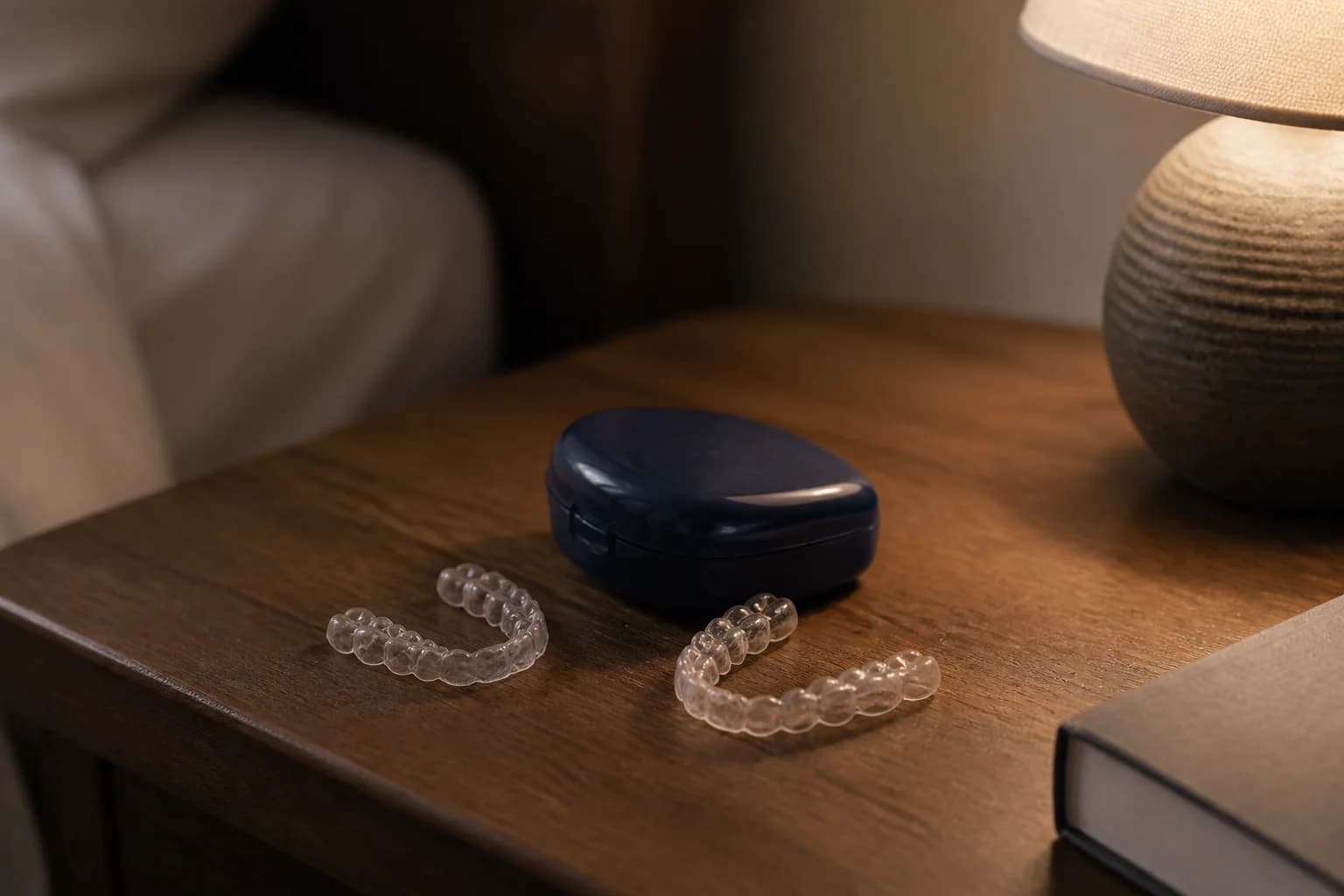
We found no research on clear aligners or retainers and wind playing. Aligners come out to eat, and some players take them out to practise too, then put them back afterward. Ask your orthodontist before you decide, because a plastic tray can change how the lips meet a mouthpiece. Removable retainers worn at night, as directed, do not get in the way of practice, and our guide on how long to wear retainers after braces covers the schedule.
If a bracket breaks or a wire pokes while you are playing, cover the end with wax and call us the same day. Our mouthguard guide has more on what to do when something comes loose.
The short answer
Expect an adjustment of a few weeks, longer for brass players, and use wax and lighter mouthpiece pressure while it settles. The research behind this is small, so tell your orthodontist which instrument you play and mention any big concert dates. If you want to plan braces around the band year, we can go through it at a complimentary consult.