
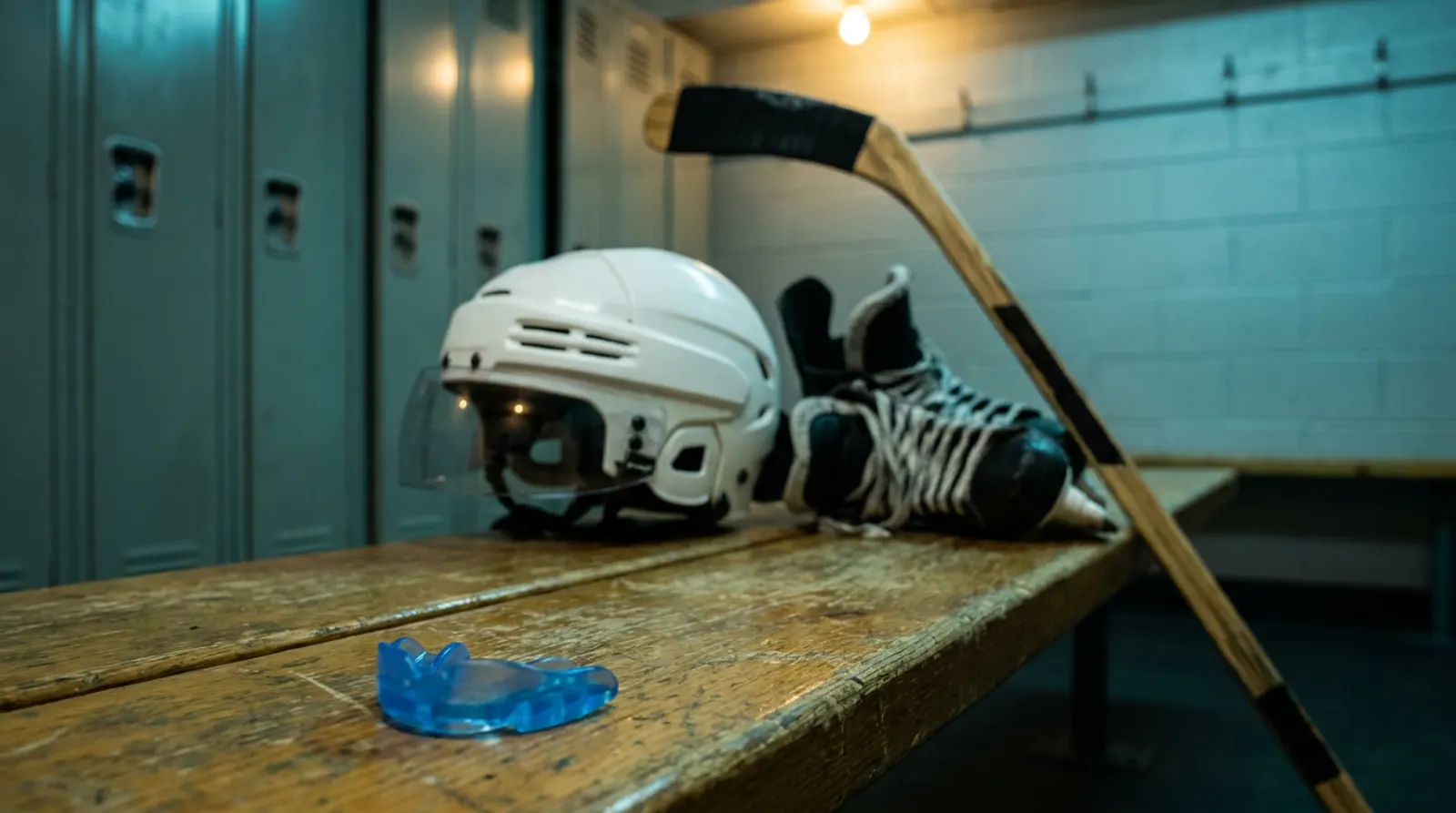

Edmonton's hockey season runs from fall into late winter, and a teenager in braces can go through several sets of adjustments in that time. Somewhere in the middle, the mouthguard that fit in October starts to feel wrong, and most families aren't sure what to buy next.
This article covers what Alberta research says about mouthguards, how braces change the choice, and a few habits that keep a guard working all season. It applies to ringette, lacrosse, basketball and soccer too, but we'll use hockey as the example.
What the Calgary study found
In 2020, researchers at the University of Calgary published a study in the British Journal of Sports Medicine on youth ice hockey players aged 11 to 17. They compared players who had a concussion during play with players hurt in other ways. Wearing a mouthguard was associated with a 64 per cent reduction in the odds of concussion.
Two details deserve attention. First, the protection showed up clearly for off-the-shelf mouthguards. It didn't reach statistical significance for custom dental guards, and the senior author suggested that may be down to a smaller sample once the guards were split by type. Second, this was an observational study, so it shows a link and doesn't prove cause. The researchers said the mechanism needs more work.
The practical message is simple and a little reassuring. A mouthguard you actually wear is worth more than the perfect one that stays in the bag.
Why braces change the question
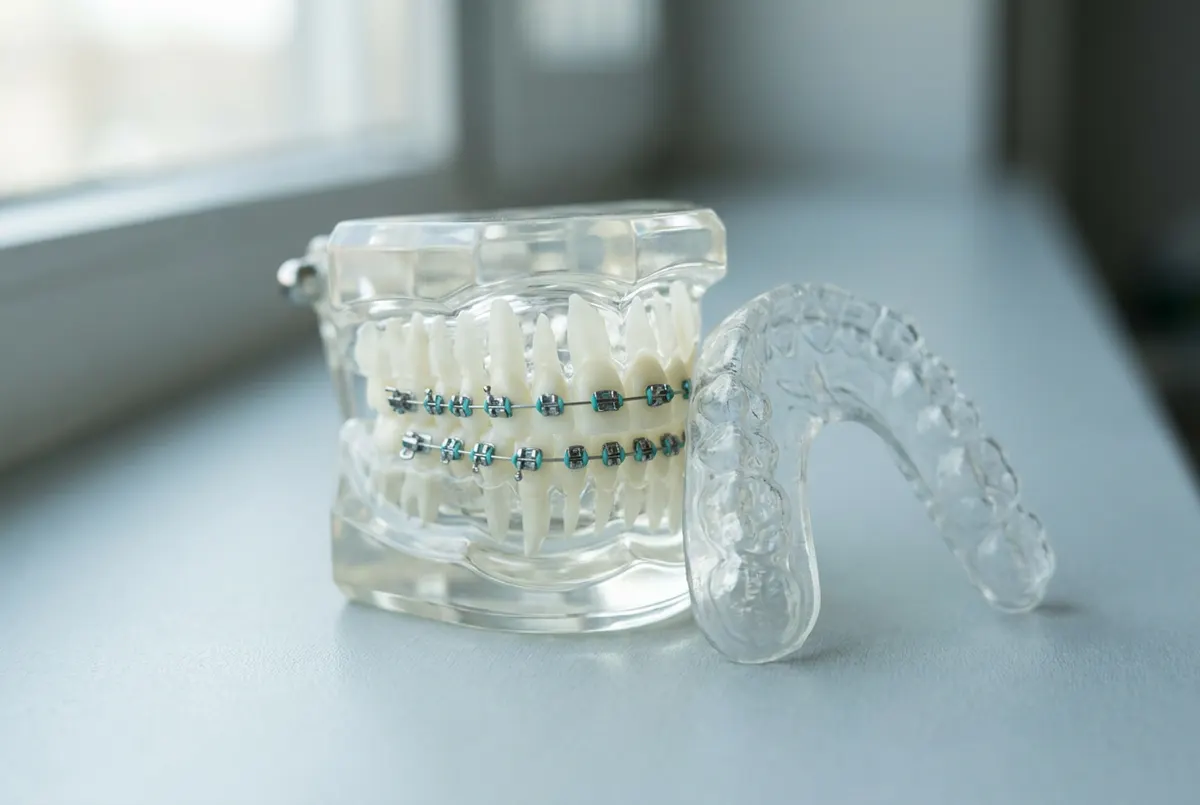
Braces put metal and ceramic on the outside of the teeth, and a standard guard is shaped for smooth teeth. A guard that fits too snugly can press on the brackets, rub the lips and cheeks raw, and in a hard hit push on the brackets themselves. Players with discomfort tend to leave the guard out, which defeats the purpose.
The second change is that teeth move. A guard molded in the first month of treatment will fit differently by month six, and differently again after braces come off. That matters more for braces than for most other mouthguard wearers.
Most players with braces wear a guard on the upper teeth. If you take a lot of contact on the lower jaw, ask your orthodontist whether a guard that covers the lower braces makes sense.
Three kinds of mouthguard
| Type | How it fits | With braces |
|---|---|---|
| Stock (ready-made) | Comes shaped, held in place by biting | Usually too tight over brackets, and it can't be adjusted |
| Boil-and-bite | Softened in hot water, then moulded by biting | Choose a version made for braces, which leaves room over the brackets |
| Custom | Made from an impression of your teeth | Built around the brackets, and can be remade as teeth move |
Custom guards cost more, and many families start with a braces-specific boil-and-bite guard. Custom makes sense for players who take frequent hits, for anyone who finds the boil-and-bite version uncomfortable, or when the same player will need a guard for years.
Getting a good fit at home
If you go with boil-and-bite, the moulding step matters more with braces than without. Follow the package directions for the water temperature, then mould with gentle finger and tongue pressure and not a hard bite. Biting down hard can push the brackets and wire into the plastic, which can loosen them and leave a lumpy fit.
Once it's cooled, check three things. The guard should stay in place without you clenching. You should be able to breathe and say a few words. And nothing should rub the same spot on your lips or cheeks. If it fails any of those, it's the wrong guard or it needs another moulding attempt.
Keep it clean and out of heat. Rinse after every game, brush it gently, and store it in a ventilated case. A guard left in a hot car or on a radiator can warp, which is the same reason retainers shouldn't be left in the car. A chewed guard has lost much of its cushioning and should be replaced.
When to replace it
Replace the guard whenever it stops feeling comfortable, and expect that to happen during treatment. After an adjustment visit, teeth can be tender for a day or two, so a guard that feels tight right then might be fine a few days later. If it still feels tight or loose after that, or you notice it has stopped seating, it's time for a new one.
Replace it again when braces come off. Teeth settle slightly after treatment, and a guard made over brackets won't fit teeth that no longer have them. Our guide on how long to wear retainers after braces covers that stage.
You can bring your guard to an adjustment visit and ask us to check how it sits. It takes a minute and often saves a purchase.
Aligners, retainers and mouthguards
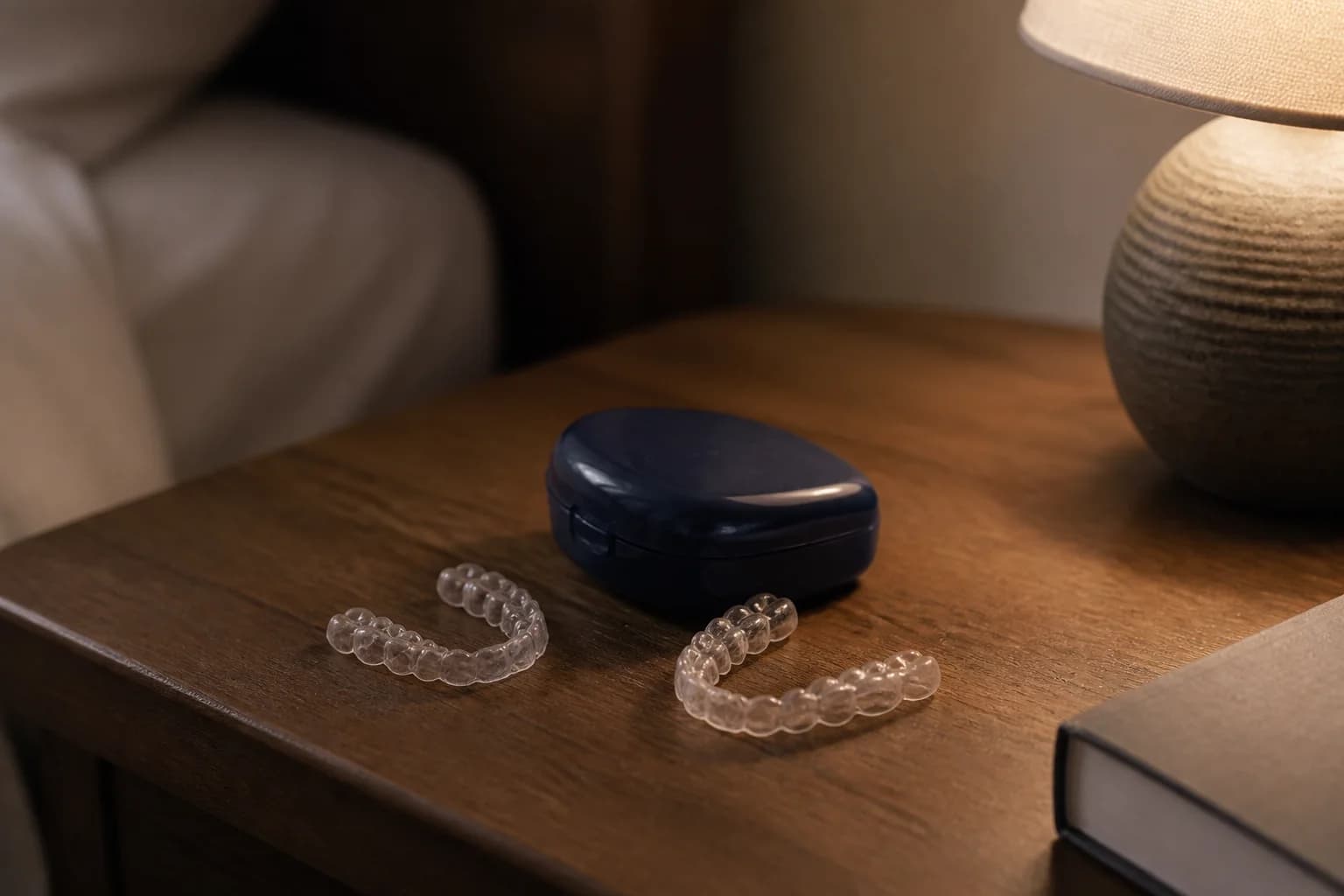
If you wear clear aligners, take them out before you play. An aligner under a guard can crack, and a cracked aligner plus a hit to the mouth is a poor combination. Put the aligners in their case, play with the guard, and put the aligners back after.
The same goes for removable retainers. They are not protection, and they can break in a collision. Keep them in a case in your bag, not in a pocket.
If something does break
A hard hit can still break a bracket or bend a wire, even with a guard in. Rinse with warm salt water, and if a wire is poking, cover the end with orthodontic wax. Call us the same day, since a loose bracket can delay treatment. Don't pull it off yourself.
If a tooth is knocked out or badly broken, go to emergency dental care right away. Handle a knocked-out permanent tooth by the crown, not the root, and keep it moist. Call your orthodontic office afterward so we can check the braces.
The short answer
Wear a mouthguard for every practice and game, because the research points to a real benefit. With braces, pick one with room over the brackets, use gentle pressure when moulding a boil-and-bite guard, and replace it when the fit changes or treatment ends. If you're not sure which type suits your player, bring the guard to your next visit or book a complimentary consult and we'll look at it together.