

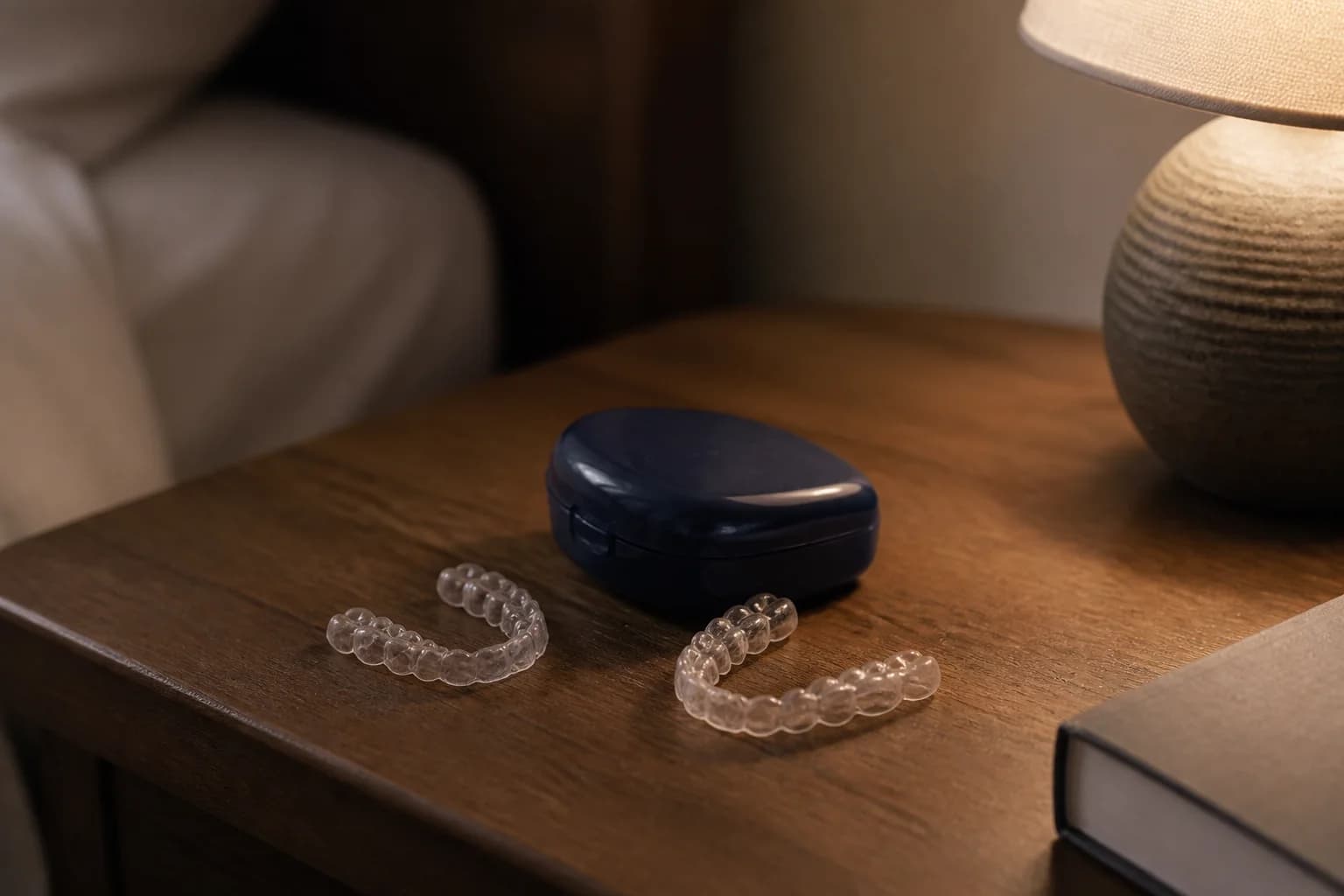

The day braces come off feels like a finish line. Your teeth look straight, flossing gets easier, and then your orthodontist hands you a pair of retainers and tells you to wear them every night. Plenty of patients nod politely and wonder how long that will really last.
The honest answer is longer than most people expect. For many of the patients we see in Edmonton, nightly retainer wear continues for years after treatment. This article lays out the usual schedule, why teeth drift in the first place, and what to do when a retainer is lost, cracked, or suddenly too tight.
Why teeth move back after braces
Teeth sit in bone, held by small fibres that stretch while braces or aligners move them. Those fibres and the surrounding bone need months to settle in the new position. Until they do, teeth tend to creep back toward where they started. The pull of lips, cheeks and tongue, plus clenching and normal ageing, keeps nudging teeth long after that.
The Canadian Association of Orthodontists makes the same point on its patient page: committing to treatment means committing to retainers. Reviews of the research, including the Cochrane review of retention, have not found one retainer type that clearly beats the rest. What matters most is that the retainer is worn and still fits.
You can see the finished results in our Before & After gallery. Each of those patients went home with a retention plan.
The usual retainer schedule
Every case is a little different, so your own instructions come first. A common pattern looks like this.
Full-time wear
For the first several months, commonly four to six and sometimes longer, removable retainers go in almost all day and night. They come out for eating, for drinks other than water, and for brushing. This is when teeth are most likely to move, so it is the stretch where missed hours cost the most.
Night-time wear
After that, most patients switch to wearing the retainer while they sleep. We tell adults and teens the same thing: plan on nights for years, and treat it like brushing. Some people can eventually space nights out, but a retainer that only goes in when you remember is usually a retainer that stops fitting.
Bonded retainers
Some patients also have a thin wire glued behind the front teeth. It holds those teeth in place without any effort from you, but it still needs careful cleaning, and it can come loose. We usually see it paired with a removable retainer for the back teeth.
If your schedule is different from a friend's, that is normal. Retention is set for the case, not copied from a chart.
Hawley, clear, and bonded retainers
No type is right for everyone. The choice depends on your bite, how well you clean around wires, and how reliably you will wear a removable retainer.
Hawley retainers have an acrylic plate that sits against the palate and a wire across the front teeth. They last a long time and can be adjusted, though they are more noticeable than clear trays.
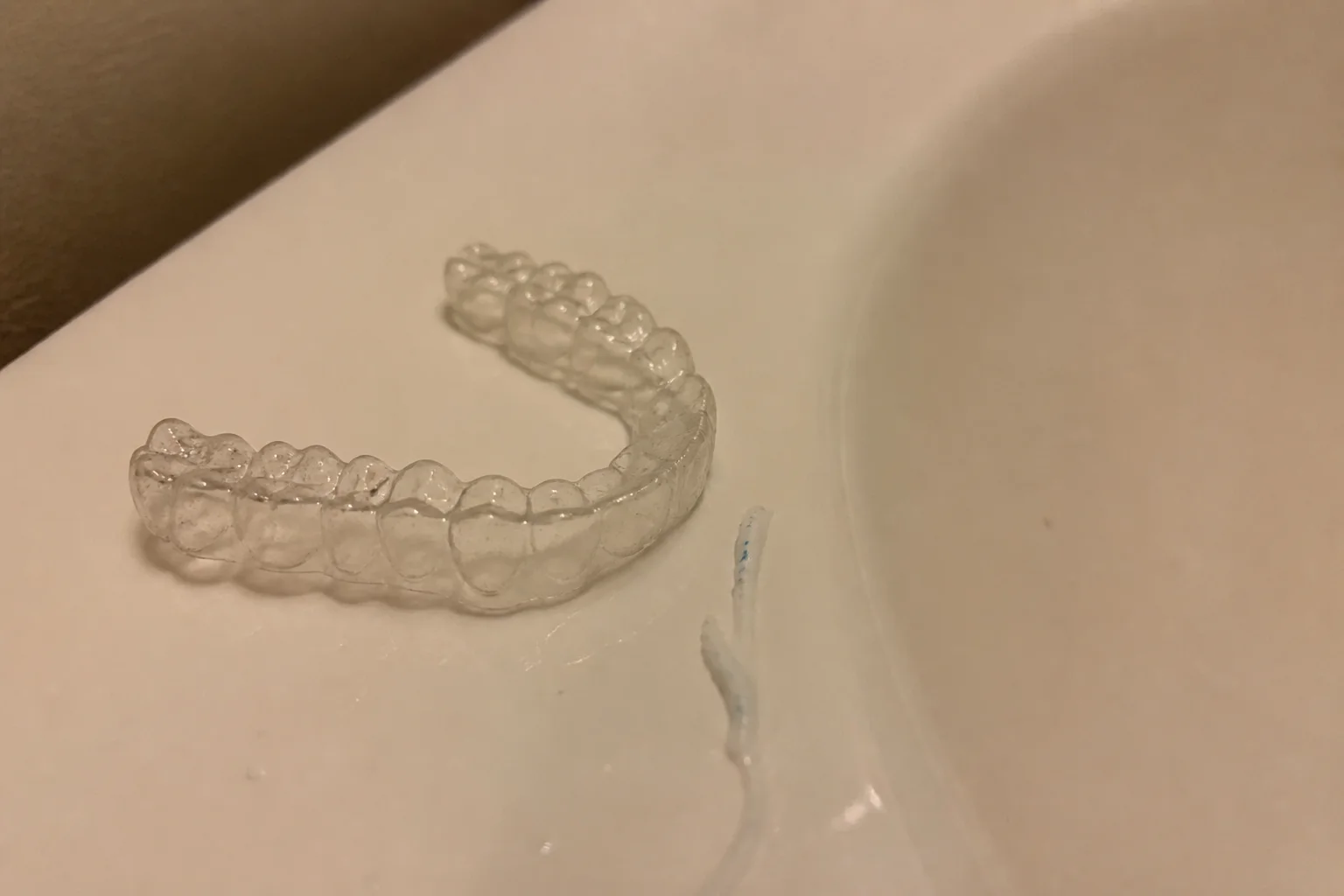
Clear retainers, often called Essix retainers, are thin plastic trays that fit over the teeth. They are discreet and comfortable. They also wear out sooner, and they warp in heat.
Bonded retainers are a custom wire glued behind the teeth. They work around the clock, but flossing around them takes patience, and a broken wire needs prompt repair.
What happens when you skip nights
Missed nights add up quickly. After a few, a retainer can feel tight. After a few weeks, it may not go in at all.
Here is how we sort it out in the office:
- If the retainer seats fully and only feels snug, go back to the schedule you were given. The snugness usually eases within a day or two.
- If it will not seat, rocks on the teeth, or causes sharp pain, do not force it. Call us, because forcing a retainer onto teeth that have moved can hurt the teeth and crack the plastic.
Students are the group we worry about most. A teen heading to the University of Alberta, MacEwan or an out-of-town camp often leaves the retainer case at home. Keep the case in the same bedside spot every night, and keep a spare set if you have one.
Lost, cracked, or warped retainers
Retainers do not last forever. Plastic warps if it sits in a hot car or goes through the dishwasher, dogs chew them, and grinding wears them thin. A retainer wrapped in a napkin at a restaurant has a way of ending up in the garbage.
If yours goes missing, call us the same week. A short gap is easy to fix, and a long one can mean teeth need to be moved again.
We built the Oasis Retainer Program for this reason. Sets start at $200 each, with two sets a year for five years, and monthly payments are interest-free. Your 3D scan stays on file, so a replacement does not always need a new impression appointment. Replacements bought outside the program are priced per arch and cost more per set.
Daily habits that protect the result
A few small routines do most of the work:
- Wear the retainer on the schedule you were given.
- Rinse it after each wear and brush it gently with a soft brush.
- Keep it in a hard case whenever it is out of your mouth.
- Keep it away from hot water, hot cars and pets.
- Bring it to your retention check so we can see how it fits.
Use cool water and a soft brush on plastic retainers. Hot water can warp them, and toothpaste can scratch them.
Adults, teens and younger patients
Adults often ask whether retention ever ends. For most of the adults we treat, it does not, and nightly wear becomes a quiet habit. Teens need more structure at first, and parents usually help most by keeping the routine boring and consistent. Families planning treatment for younger children can read about our child and teen programs, which cover retention from the start.
When to call
Contact us soon if any of these apply:
- your retainer is lost or broken
- it no longer seats the way it used to
- a bonded wire feels loose or sharp
- you see new crowding or a tooth starting to twist
- you finished treatment somewhere else and want an Edmonton clinic to look after your retention
You can join the Retainer Program or book a complimentary consult and have one of our orthodontists check the fit. You do not need to have been treated at Oasis.
The short answer
Most people wear retainers nearly full-time for several months after braces, then switch to nights and keep going for years. Your own schedule belongs to your case, so follow what your orthodontist gave you.
If your retainer is missing, tight, or overdue for replacement, deal with it now. A new set costs far less than moving teeth a second time.