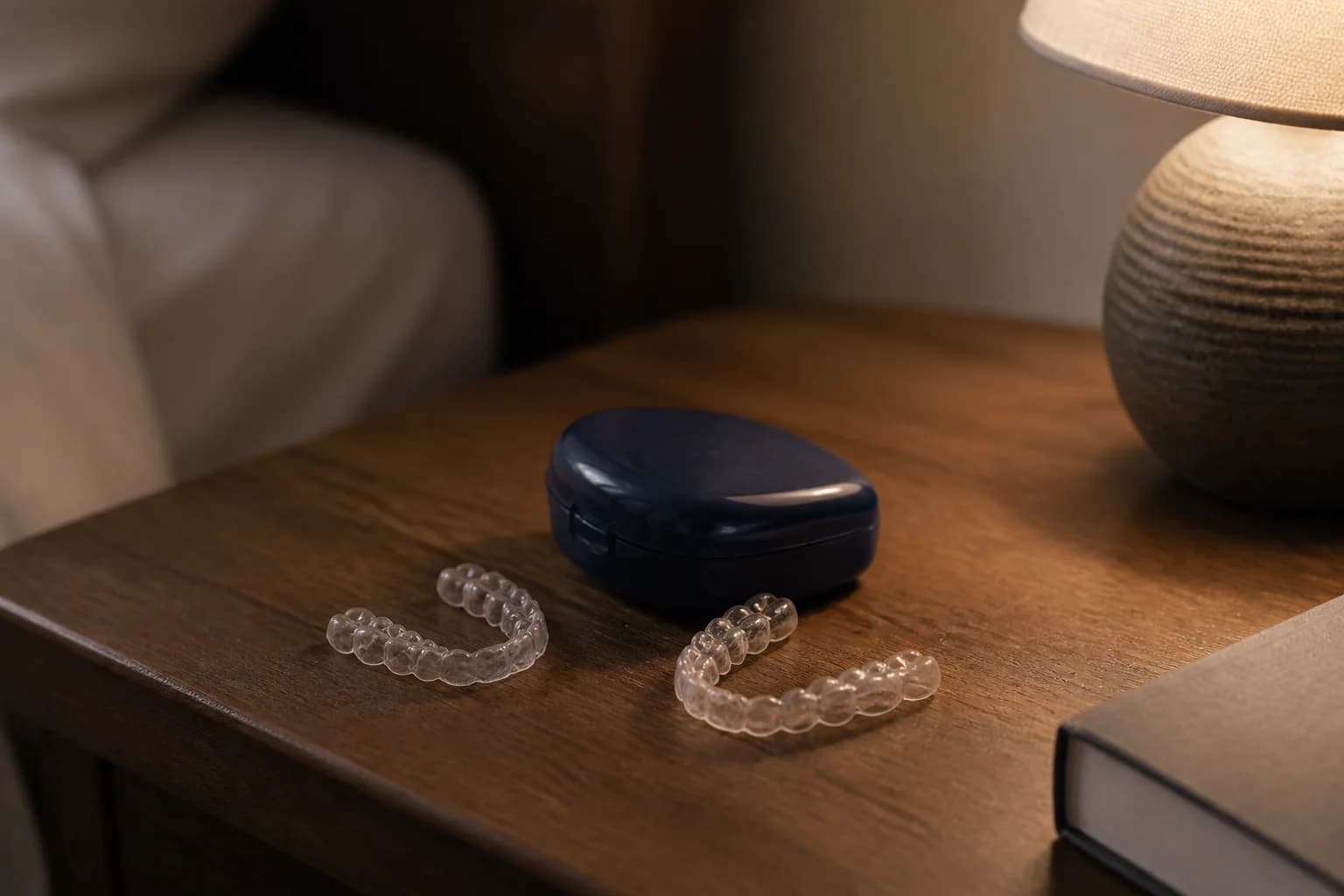



Moving partway through braces is more common than people expect. A job, a posting, a separation or a first year at university in another city can all land in the middle of treatment. The braces can usually carry on with a new orthodontist, but it goes better when the paperwork starts early.
This article covers what to ask for before you leave, what Alberta law says about your records, what a new office will do, and when it makes sense to finish first or keep your current orthodontist and travel to adjustments.
Tell your orthodontist early
Give your current office your moving date as soon as you have one. The Canadian Association of Orthodontists says your current orthodontist prepares the transfer documents for the new one, and that the new orthodontist will usually take a new set of records, meaning models, photos and X-rays, to see where you are in treatment. We would add that it helps to ask for a short written summary of the plan.
Ask whether your last visit before the move can be timed so the wire in place holds until your first appointment with the new orthodontist, and what to do if a bracket comes loose in between. Moves rarely line up with a visit schedule, and a plan for that gap costs nothing to arrange.
Ask what remains: how many months are left, what stage the wire is at, whether elastics or other steps are planned, and when the braces were due to come off. That gives a new orthodontist something concrete to continue from or to change with a reason.
A suggested order of steps
When you know the date
Tell your office
Ask for a transfer summary and what remains of treatment.
About a month before
Request your records in writing
Alberta gives the custodian up to 30 days to respond.
Same time
Ask about money
Your contract balance, the new office's fee, and how your insurer will pay.
Your last visit
Time the wire for the gap
Ask what to do if a bracket comes loose before the first new appointment.
After the move
Records appointment at the new office
Photos, scans or impressions and X-rays, then a conversation about the plan.
The timing is a suggestion, not a rule. Your orthodontist may adjust it for your case.
Your records are yours to request
In Alberta, dentists are custodians under the Health Information Act, according to the Office of the Information and Privacy Commissioner, and you have a right of access to the health information they hold about you. The Alberta government says the custodian must respond within 30 days and may charge a $25 fee for producing a copy, with other fees possible under the regulation. Put the request in writing, ask for photographs, X-rays and treatment notes, and keep your own copy.
Thirty days is the limit, so ask well before the move and not in the final week. If you think a fee was calculated wrongly, the Commissioner's office says you can ask it to review that.
Money, contracts and insurance
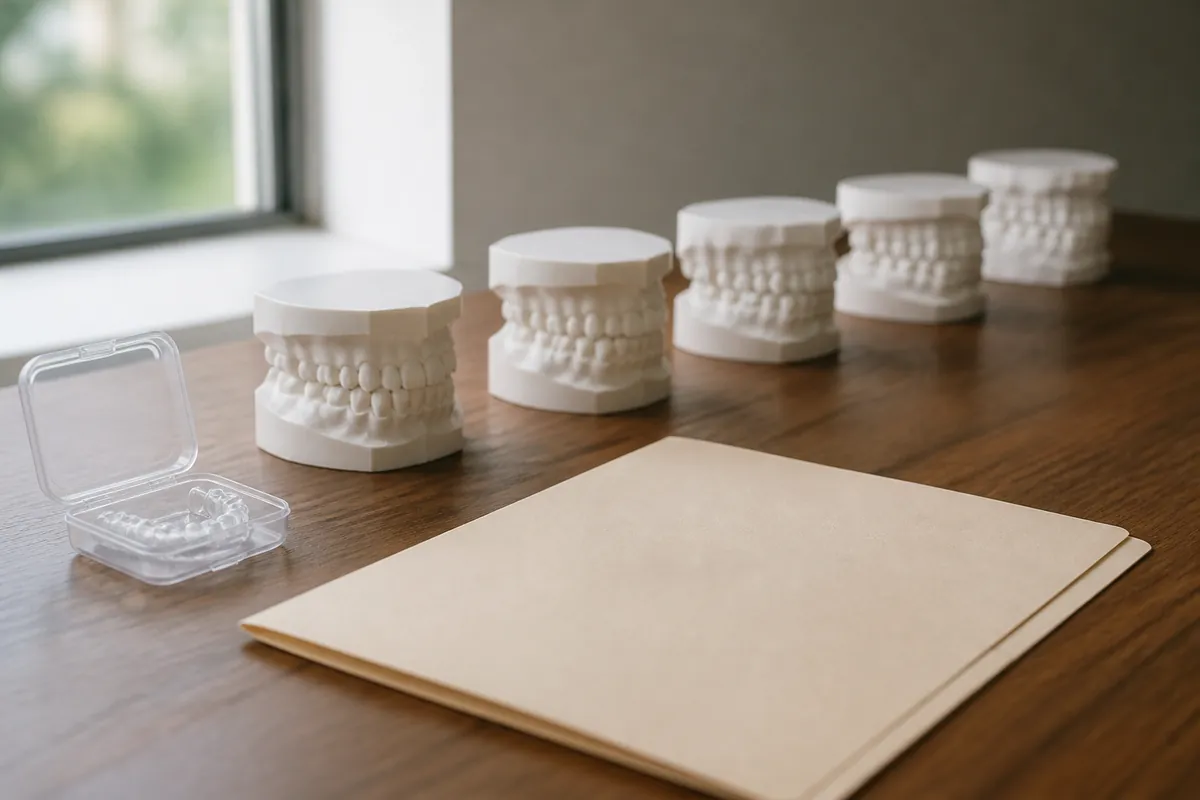
Ask your current office what happens to the contract: how much has been paid, what is still owing, whether any part of the fee is credited for treatment you will not receive there, and what the office needs in writing. Then ask the new office what it charges to take over. The Canadian Association of Orthodontists notes there may be additional fees for transferring, and an exam and fresh records are usually part of it.
On insurance, the lifetime orthodontic maximum belongs to the patient and not the office, so a transfer does not reset it. Tell your insurer about the move and ask how the plan will pay, because plans differ on whether they pay in one amount or over the course of treatment. Our guide to paying for braces in Alberta lists the questions worth asking.
What the new orthodontist will do
Expect a records appointment with photos, impressions or scans, and X-rays, followed by a conversation. Sometimes the plan stays exactly as it was. Sometimes the new orthodontist changes the finishing steps after seeing your teeth in person, because they are responsible for the result from that day on.
If you are unsure about the plan you have been handed, a Second Opinion lets you compare a specialist's view with it before you decide who will finish your treatment. Our guide on orthodontist versus dentist explains when that is worth doing.
When to finish first, and when to keep your orthodontist
If you are within a few months of finishing, ask your current orthodontist whether it makes sense to finish before the move, or to bring the removal date forward or push it back. That depends on where the teeth are, and only they can answer it.
Some university students keep their home orthodontist and book adjustments during reading week and school holidays, since visits are often a month or two apart. That works when you know what to do if a bracket breaks in between. Cover a poking wire with wax and call an orthodontic office the same day, and our mouthguard guide has more on what to do when something comes loose.
Retainers need a plan as well. If treatment ends in the new city, ask who will supply the retainers and who will check them, since retention starts the day the braces come off and runs for years. Our guide on how long to wear retainers after braces covers the schedule.
Moving to Edmonton in the middle of braces
If you are arriving in Edmonton, bring what you can: the previous orthodontist's name, the date the braces went on, the type of appliance, any records you have received, and your insurance details. At a complimentary consult we can look at where you are and talk through your options, including whether a transfer makes sense. The Second Opinion route is there for anyone who wants a specialist's view before changing offices.
If you are leaving Edmonton, the Canadian Association of Orthodontists page linked above has a Find an Orthodontist link for the city you are moving to.
The short answer
Treatment can usually transfer. Tell your orthodontist as soon as you know your date, request your records in writing about a month ahead, get written figures from both offices, and ask your current orthodontist whether finishing first is an option. If you are coming to Edmonton, a complimentary consult is the place to start.